It’s not just cleaner air: How smart purification changed our family dinners for good
Remember when family dinner meant arguing over who forgot to open the windows? Or coughing through soup because the air felt heavy? I did—until we got a smart air purifier. It didn’t just filter dust; it cleared the tension, too. No more stuffy rooms, no more distractions. Just us, breathing easy and actually talking. This isn’t about tech specs—it’s about how cleaner air quietly transformed our most important ritual. Before this, I didn’t realize how much the air in our home was shaping our moods, our energy, even the way we connected. Now, dinner feels different. Calmer. Closer. More present. And it all started with something as simple as breathing.
The Dinner Table Wasn’t Working—And We Didn’t Even Realize Why
For years, I prided myself on keeping family dinner alive. In a world where everyone’s rushing, I believed that shared meals were our anchor. But honestly? Most nights felt like a battle. My youngest would start sneezing halfway through salad. My husband would rub his temples and say, “Is it just me, or is the air thick tonight?” And by the time dessert came around, someone had already cleared their plate and left—usually without saying much.
We blamed it on exhaustion. On school stress. On screen time. But the truth was, we were all reacting to something we couldn’t see. The air in our dining room—especially in winter, when the windows stayed shut—was stale. Cooking added grease particles and moisture. The carpet tracked in pollen and dust. Our dog’s shedding didn’t help. And with four people breathing in a small space, carbon dioxide built up fast. We weren’t just eating together—we were slowly suffocating each other with invisible discomfort.
One night, after my daughter coughed through her chicken and my son snapped at her for “making that noise,” I had enough. It wasn’t about the food. It wasn’t about manners. It was about how we all felt—irritable, sluggish, slightly on edge. That’s when I started wondering: what if the problem wasn’t us? What if it was the air we were breathing?
Discovering the Invisible Problem: Air Quality’s Real Impact on Mood and Connection
I’ll admit, I used to think “clean air” meant no smoke, no strong smells, and maybe a whiff of lemon from the cleaning spray. But the more I read, the more I realized how wrong I was. Scientists have known for years that indoor air quality directly affects cognitive function, emotional regulation, and physical comfort. Even small increases in pollutants like VOCs (volatile organic compounds) from cleaning products or cooking oils can cause headaches, fatigue, and irritability—especially in children and sensitive individuals.
One study I came across found that high CO₂ levels—common in crowded, poorly ventilated rooms—can reduce decision-making performance by up to 50%. Another showed that particulate matter from frying or baking can trigger allergic responses and breathing discomfort, even in people without diagnosed asthma. This wasn’t just about long-term health. This was about how we felt in the moment. Was it any wonder our dinners felt tense when our brains were literally struggling to function?
I bought a simple air quality monitor and placed it near the dining table. Within a week, the data shocked me. CO₂ levels regularly spiked above 1,200 ppm during meals—well into the range linked to drowsiness and poor concentration. PM2.5 (tiny airborne particles) rose sharply after frying or boiling, sometimes hitting levels comparable to a busy city street. The air wasn’t just “a little stuffy.” It was actively working against us.
That’s when it hit me: we weren’t failing at family time. We were fighting an invisible opponent. And once we could see it, we could do something about it.
Why We Chose Smart Purification (And Why It’s More Than Just a Filter)
At first, I looked into basic air purifiers—those white boxes that hum quietly in the corner. But I quickly realized they weren’t enough. Most require manual control, have fixed settings, and don’t respond to changing conditions. I didn’t want to remember to turn it on every night. I didn’t want to guess which fan speed to use. And I definitely didn’t want another gadget that demanded attention instead of helping.
That’s why I started researching smart air purifiers—devices that don’t just clean the air, but understand your home. These models use sensors to detect real-time changes in air quality, adjust fan speed automatically, and even learn your routines over time. Some can connect to your home Wi-Fi, send alerts to your phone, or integrate with voice assistants. But more than the tech, I cared about how it would fit into our life—without adding more stress.
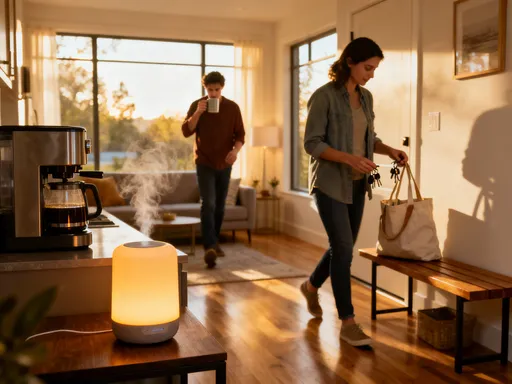
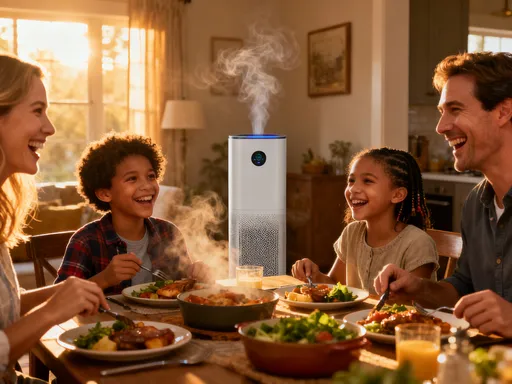
The one we chose has a “Dinner Mode” setting. It learns when we usually eat—around 6:30 p.m.—and starts pre-cleaning the air 20 minutes before. It detects the spike in oil particles when I sear salmon or the humidity when I boil pasta, then ramps up power to handle it. After dinner, it gradually slows down, maintaining clean air while keeping noise low. No buttons. No decisions. Just quiet, consistent support.
And here’s the thing: it’s not just about filtering particles. It’s about creating the right environment for connection. A smart purifier doesn’t replace conversation, but it removes the background noise—both literal and physical—that makes us short-tempered or distracted. It’s like having a quiet helper who knows exactly when to step in.
How It Changed Our Dinners: From Rushed Meals to Meaningful Moments
The difference started showing up within days. The first night we used it, I noticed how fresh the air felt as we sat down—crisp, like after a rainstorm, but without the chill. My daughter took a deep breath and said, “It smells nice in here.” No sneezing. No throat-clearing. Just calm.
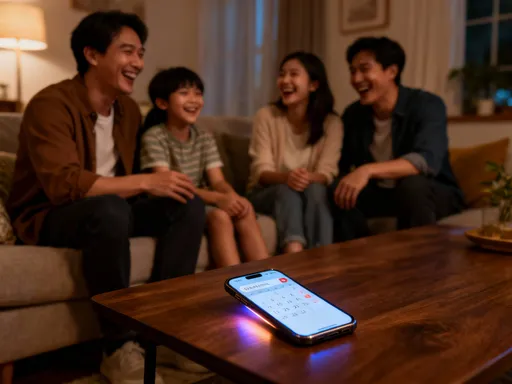
And then, something unexpected happened. We stayed at the table longer. Not because we were forced to, but because no one was in a rush to leave. My son actually asked about his sister’s day. My husband put his phone away—without me asking. We laughed more. Talked more. Even the dog seemed calmer, curling up under the table instead of pacing.
I realized that before, we’d all been subtly uncomfortable—itchy eyes, dry throat, low energy—and that discomfort was shaping our behavior. We were irritable because we weren’t breathing well. We were distracted because our brains were foggy. Now, with clean air, the mental and physical fog lifted. Conversations didn’t feel like effort. Presence wasn’t a goal—it just happened.
One night, my daughter looked around and said, “I like dinner now.” That simple sentence nearly brought me to tears. This wasn’t about food or routine. It was about feeling good in our own home. And that, I realized, is the real power of smart technology—not flashy features, but quiet improvements that make life feel lighter.
Making It Work for Real Life: Simple Routines That Made the Tech Disappear
The best part? We barely think about the purifier anymore. That’s by design. Technology should serve life, not interrupt it. We set it up to run on a schedule—“Dinner Mode” at 6:10 p.m., “Night Mode” after 9 p.m.—and let it do its thing. The app sends a gentle notification if the filter needs changing, but even that’s rare. It’s become as invisible as the air it protects.
We also discovered little habits that made it even more effective. I leave the kitchen door open while cooking so the purifier can catch fumes before they spread. We keep the dining room door open during meals to allow better airflow. And on days when we bake or fry, I sometimes start the purifier early—just a tap on the app while I’m prepping ingredients. But most of the time? It’s fully automatic.
What I love is how it’s become part of our rhythm. Just like I set the table or pour water, the purifier is now part of dinner prep. But unlike those tasks, I don’t have to do anything. It just happens. And because it’s silent and unobtrusive, no one feels like we’re “using a machine.” We’re just living—more comfortably, more peacefully.
That’s the dream, isn’t it? Tech that doesn’t demand your attention but quietly improves your day. This isn’t about being “high-tech.” It’s about being high-comfort. And for our family, that’s worth more than any gadget feature.
Beyond the Dinner Table: How Cleaner Air Improved Our Whole Home Life
What started as a fix for dinner quickly rippled through the rest of our home. Mornings became easier. No more groggy eyes or scratchy throats when we woke up. My daughter’s seasonal allergies—once a springtime nightmare—have been milder this year. She’s needed less medication, and her nighttime breathing is smoother.
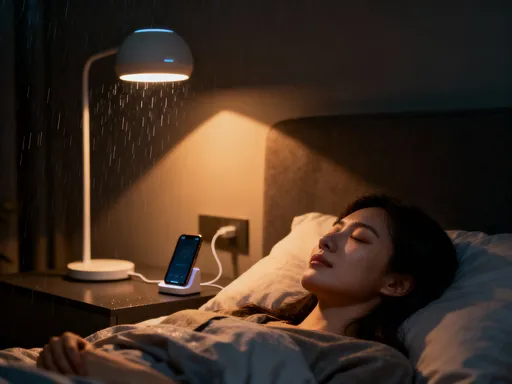
Even sleep improved. We didn’t expect that. But clean air means fewer irritants in the bedroom, less congestion, and better oxygen flow. My husband, who used to wake up with a dry nose, now sleeps through the night. I feel more rested, too—less sluggish in the mornings, more alert during the day.
Then there’s focus. My son used to struggle to finish homework after school, always complaining he was “too tired.” Now, with cleaner air in the living room and his study corner, he settles in faster and stays on task longer. His teacher even commented on his improved concentration. I can’t say it’s all because of the purifier—but I can say his environment is calmer, clearer, and more supportive.
We’ve also noticed fewer colds. Especially in winter, when germs spread like wildfire, we’ve stayed healthier. Experts say clean air can reduce airborne viruses and bacteria—especially when paired with good ventilation and hygiene. I don’t know if we’re immune, but I do know we’re not passing bugs as quickly as before.
The purifier has become a quiet guardian of our well-being—working all day, every day, not just at dinnertime. It’s not a cure-all. But it’s a foundation. And sometimes, the smallest changes create the biggest shifts.
A Small Change, Deeply Felt: Why This Matters More Than We Expected
When I first bought the purifier, I thought it was about air. Now I know it was about presence. Family dinner isn’t sacred because of the food or the routine. It’s sacred because it’s one of the few times we all stop, look up, and truly see each other. But you can’t be present if you’re uncomfortable. You can’t listen if your head is foggy. You can’t connect if you’re distracted by a tickle in your throat.
By removing that invisible barrier, the smart purifier didn’t just clean the air—it cleared space for what matters. For laughter. For questions. For silence that isn’t awkward, but peaceful. For the kind of moments that don’t make headlines, but make a life.
I don’t care about CADR ratings or filter layers. I care that my daughter finishes her meal without coughing. That my husband shares stories instead of scrolling. That we linger, even when we’re tired. That we’re here, together, breathing easy.
Technology doesn’t have to be flashy to be transformative. Sometimes, the most powerful tools are the ones you forget are there—until you imagine life without them. And now, I can’t imagine our dinners, our home, our family life, without this quiet helper by our side. It’s not just cleaner air. It’s a deeper breath. A calmer mind. A fuller heart. And for that, I’m truly grateful.